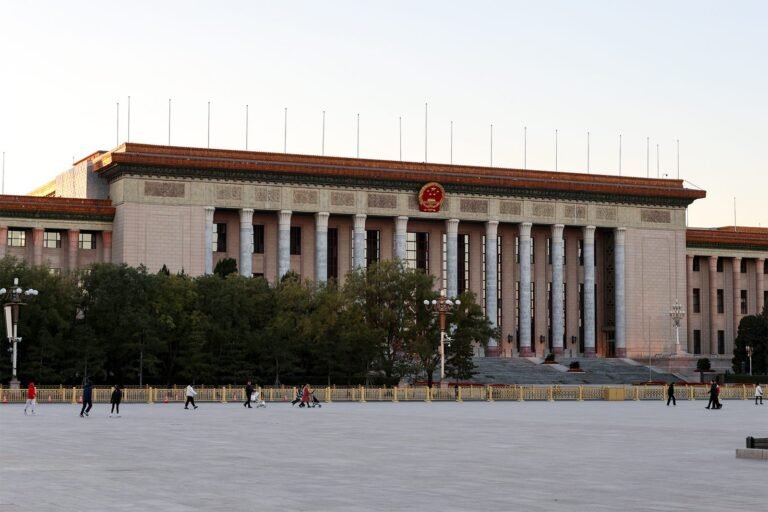
China is not quiet: what Beijing’s restraint really tells us
Khaled Atallah argues that Beijing's calm is neither waiting nor weakness but military deterrence and economic activity in minerals and technology, and sets out his forecasts.
 Khaled AtallahPolitical and security analyst
Much of the world has spent this year watching Washington: the war with Iran, the tariff rounds, the turbulence of American domestic politics. Beijing, by contrast, appears quiet. No military involvement in the Middle East, measured rhetoric, few headlines. The common reading is that China is waiting, patiently building strength while its rival exhausts itself.
I will say it plainly: that reading is comfortable, and it is wrong. China is not quiet. It is active in the arenas that do not make headlines, and restrained in the one arena that does.
Four explanations, one survivor
There are four ways to explain Beijing's apparent restraint: strategic patience, domestic preoccupation, mutual deterrence, or a false premise, in which China is highly active through economic and technological tools rather than military ones.
The useful question is not which explanation the evidence supports, but which one it contradicts least. Domestic preoccupation fails first. A country absorbed by its own problems would not impose sweeping export controls on gallium, germanium, graphite and rare earth processing, nor keep its pace in semiconductors under American restrictions. Strategic patience sits awkwardly with sustained military pressure around Taiwan and in the South China Sea. What survives is deterrence and unseen activity together: restrained militarily because escalation is too costly, assertive economically because that is where its leverage is real.
The real lever is minerals
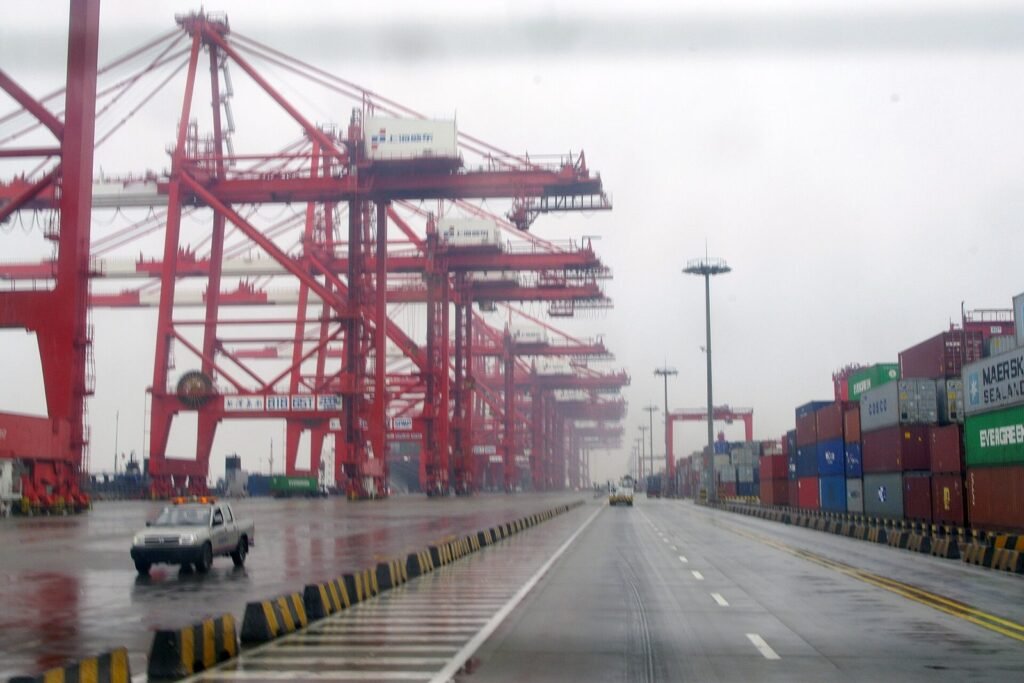
If China has a weapon it is ready to use, it is not its navy but its position in critical minerals and processing. Each round of American technology controls has been followed by a Chinese restriction aimed at a specific Western vulnerability. There is no modern precedent of China using force in response to sanctions. The trigger for force is narrow and political: a change in the status of Taiwan.
What it means for our region
Two claims deserve caution. The first is that China's rise will soon loosen the dollar's grip. Gulf currencies and the Jordanian dinar are pegged to the dollar by institutional design, and there is no political will to change that. The second is that the region must choose between Washington and Beijing. Saudi Arabia, the UAE, Qatar and Turkey are already exploiting the competition, deepening trade with China while keeping American security ties. Jordan cannot afford to take sides, but it can bargain in energy, water and infrastructure from the position of a partner both powers need.
My forecast
I expect Beijing to answer any new round of US chip controls with a new restriction on a mineral or processing technology within weeks, not with a military move. I expect no direct Chinese military action in the next twelve months unless the status of Taiwan changes, and I expect the dinar's dollar peg to hold through 2027. If China announces sweeping rather than targeted export bans, sells US Treasuries at pace, or turns its Taiwan exercises into a sustained blockade, I will revise this judgement publicly.
China should be read by its contracts, controls and supply chains, not by its silence.
About the author: Khaled Atallah has worked in political and security analysis since 2014 and is the founder of Axiom Engine X.
The full version, with the table of key judgements, is on Axiom Perspectives: China is not quiet
Source: A ONE News · Translated from the Arabic original.